The Subconscious Sandbox: Why Your Brain Plays War Games While You Sleep
For the better part of the 20th century, the dominant scientific narrative surrounding dreams was aggressively, almost insultingly, unromantic. In the late 1970s, the "activation-synthesis" hypothesis became the darling of neuroscience. To put it in terribly unpoetic terms, this theory suggested that dreams were essentially the brain’s way of taking out the trash. As we sleep, the theory proposed, random neurons fire in the brainstem, and our desperate, meaning-making cerebral cortex frantically tries to stitch this biological noise into a coherent narrative.
Under this model, dreaming that you are trying to defuse a ticking time bomb while your teeth fall out, only to realize you have missed the final exam for a class you never registered for, is just a random neural hiccup. It is the biological equivalent of a toddler mashing keys on a piano.
But anyone who has ever woken up with their heart hammering against their ribs, drenched in sweat from a nightmare that felt more viscerally real than their own waking life, knows deep down that the "random noise" theory is profoundly inadequate.
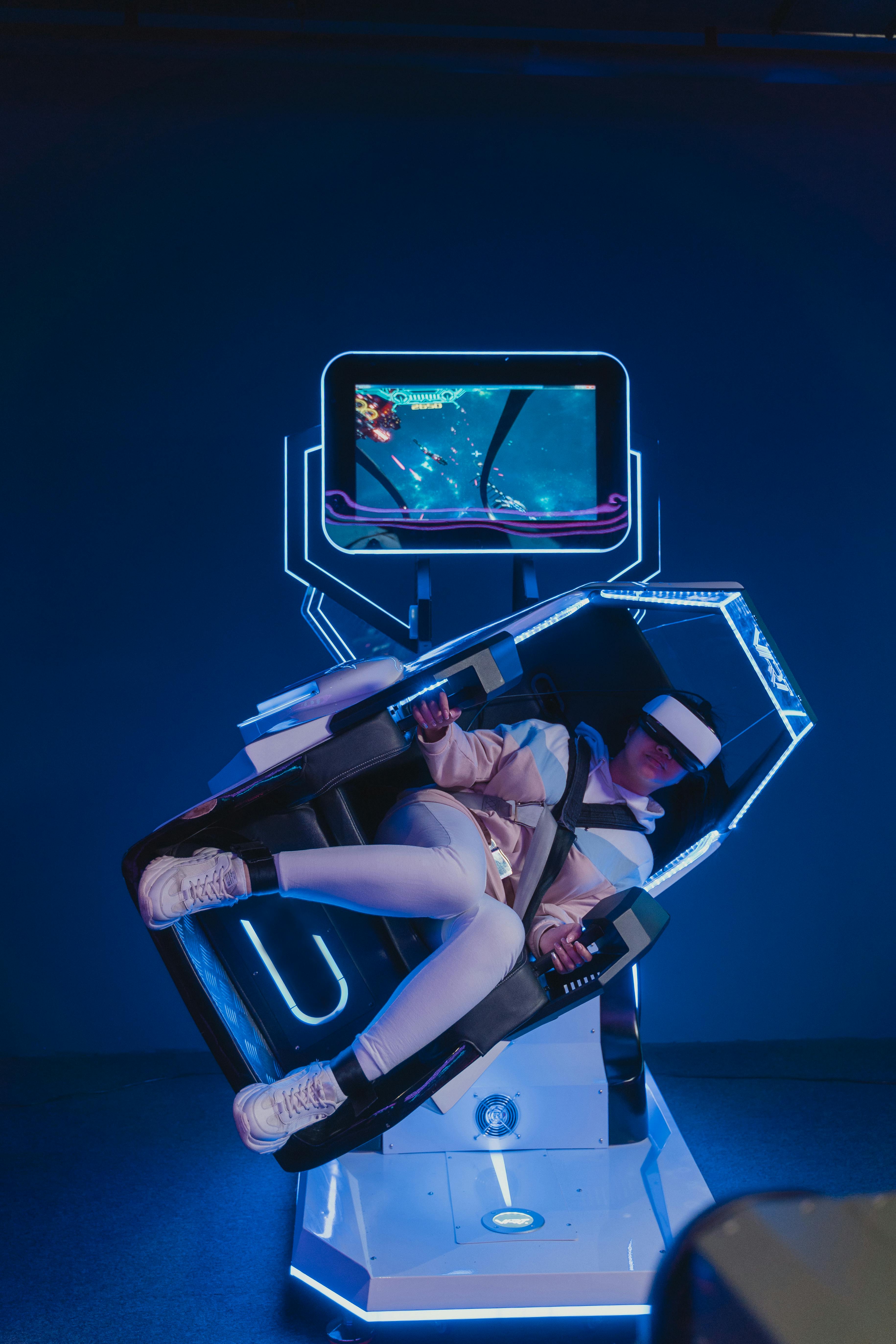
What if the sleeping mind isn’t a garbage disposal? What if it is an ultra-advanced, high-fidelity Virtual Reality simulator?
Part 1: The Flight Simulator of the Psyche
Think of your waking state like a pilot flying a commercial jet on a clear, sunny Tuesday. The route is memorized. The autopilot is engaged. You are answering emails, driving your morning commute, and making polite small talk with the barista. It is routine. It is comfortable. The cognitive load is low.
But a commercial airline does not train its pilots only for sunny Tuesdays.
When a pilot goes into training, the flight instructor boots up a multimillion-dollar simulator. The instructor’s entire job is to intentionally throw absolute, terrifying chaos at the pilot. They program catastrophic engine failures, terrifying crosswinds, hijacked controls, and plummeting cabin pressure. The instructor does not do this because they hate the pilot; they do it to ensure that when a real crisis hits at 30,000 feet, the pilot doesn't freeze. The panic is pre-processed. The muscle memory of survival is already hardwired.
When you fall asleep, your subconscious assumes the role of the flight instructor. It dims the waking lights, boots up the neural mainframe, and intentionally throws you into the storm.
Evolution did not give us dreams to entertain us with surrealist cinema. It gave us dreams to keep us alive. If our ancient ancestors dreamed of being stalked by a saber-toothed tiger, they were neurologically rehearsing the escape. They were mapping out the terrain, testing their adrenaline response, and practicing the terror of the hunt in a closed, safe environment where a mistake wouldn't result in actual death. Those who ran the simulation at night were statistically more likely to survive the jungle during the day.
But today, the vast majority of us are not being hunted by apex predators. The simulator hasn't been uninstalled; it has simply updated its software to match the modern human condition. The threats we face now are social, emotional, and psychological. And so, the simulations have become infinitely more complex.
Part 2: Case Study – The Espionage Motif
To understand the sheer sophistication of this simulator, let us step back into the clinical, third-person perspective and analyze a specific, universally reported dream theme: the "Espionage" or "Investigation" scenario.
Consider Subject A. In their waking life, Subject A is a perfectly ordinary individual. They pay their taxes, they walk their dog, and their most dangerous daily activity is navigating office politics.
Yet, by night, Subject A’s brain boots up a breathtakingly complex scenario. They report dreams of navigating labyrinthine, brutalist buildings. They are clutching a briefcase or a USB drive of vital, world-ending importance. They are hiding from an unseen, omnipresent authority—faceless agents, police forces, or a vague, terrifying tribunal. Suddenly, Subject A is aware that they have committed, or have been framed for, an unknown but catastrophic crime. There are locked doors, encrypted files, ticking clocks, and a heavy, suffocating paranoia that clings to the air like humidity.
The lazy psychoanalyst would dismiss this as simple cultural residue—the byproduct of watching too many spy thrillers before bed. But evolution is fiercely economical. The subconscious does not waste immense computational energy rendering a multi-sensory, adrenaline-soaked VR environment just to replay a Netflix queue.
This specific simulation is the psyche's way of processing the complex waking anxiety of being perceived.
In waking life, Subject A likely struggles with the profound vulnerability of being judged, discovered, or found lacking. The "spy" is the ultimate, exaggerated avatar for the modern human ego: an entity whose entire survival depends on successfully wearing a mask, guarding its true identity, and perfectly predicting what the "enemy" wants to see.
When Subject A is thrust into this cinematic nightmare, the subconscious is actively forcing them to process the exhausting waking anxiety of having to guard their authentic self. Subject A is placed in a high-stakes environment where they must lie to survive, hide evidence, or decode secrets. The simulator isn't torturing Subject A for fun. It is forcing them to navigate the murky waters of deceit and truth, acting as a pressure valve for the sheer fatigue of being a "double agent" in their own waking life—curating one personality for work, another for their family, and yet another for the internet.
Part 3: Stress-Testing the Moral Compass
If we accept that the dream is a simulator designed to test our limits, we inevitably stumble upon a rather disturbing question. Why does the simulator so frequently force us to do terrible things?
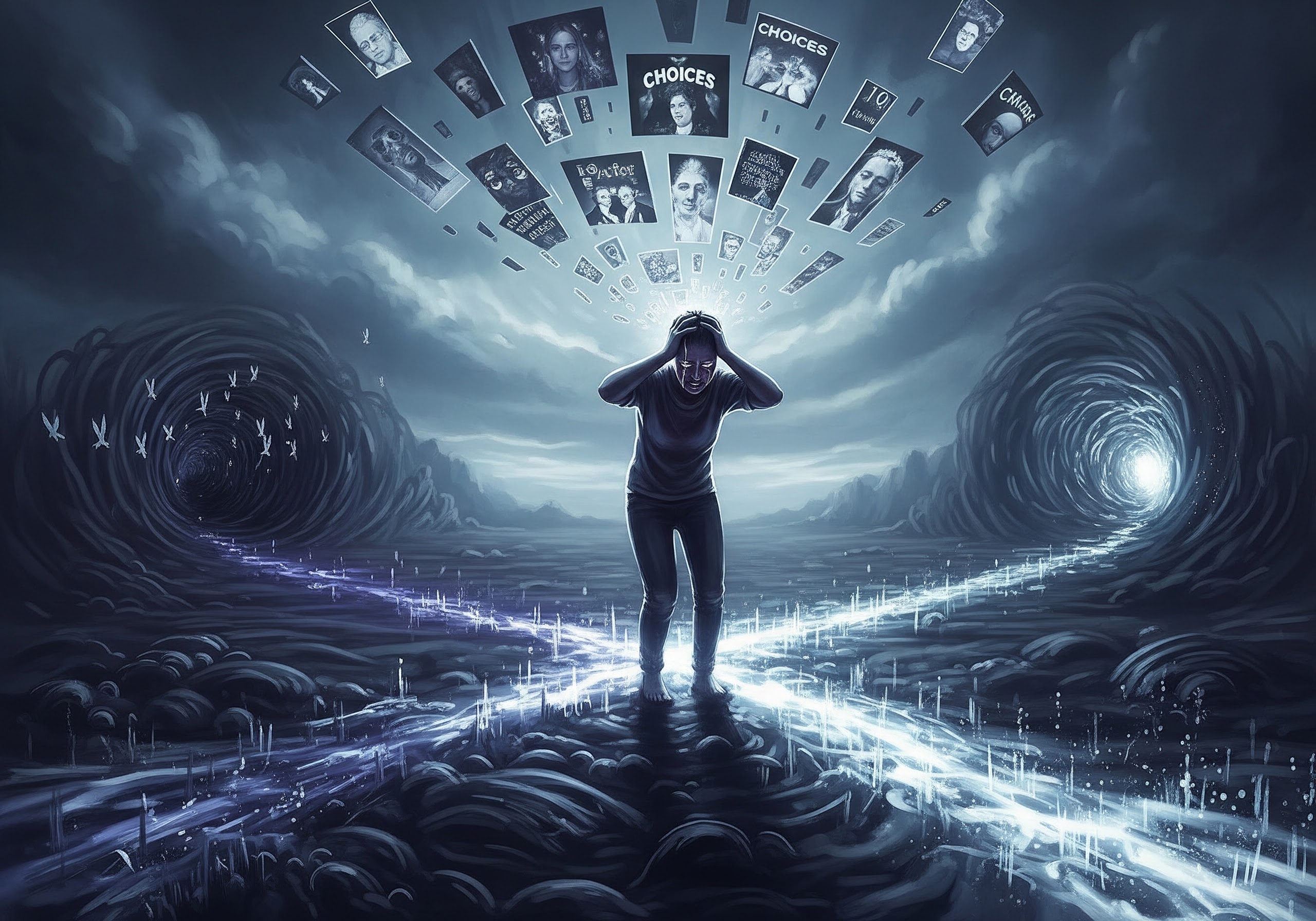
It is one thing to dream of being chased by a faceless authority. Those are survival drills. But what about the dreams where we are the architects of the disaster? We have all experienced those deeply unsettling nights where the dream forces us into the crucible of an impossible moral dilemma. We find ourselves lying to someone we love, abandoning a child in a crowded place, or betraying a fiercely loyal friend to save our own skin.
We wake up bathed in cold sweat, our chests heavy with a suffocating, phantom guilt, desperately grateful that it was only a dream. Why run these agonizing, heartbreaking "war games" in the first place?
We must look at the dream state not just as a laboratory for physical survival, but as a testing ground for the spirit. We must explore the immunological response of the soul.
In the waking world, choices carry the heavy, irreversible physics of consequence. You cannot un-say a cruel word. You cannot un-betray a friend. If you fail a moral test in daylight, the collateral damage is real, permanent, and often devastating. But your subconscious recognizes that you are a flawed, evolving creature. You need to learn how to navigate the murky waters of temptation, cowardice, and selfishness.
So, it generates a high-stakes environment with zero real-world casualties.
Think of how a biological vaccine works. A vaccine does not cure a disease; it introduces a harmless or dead version of a virus into your bloodstream to intentionally trigger a crisis. The immune system detects the invader, panics, goes to war, and learns how to defeat it. By the time the real, lethal virus shows up, the body already has the blueprint.
Your moral nightmares are the exact same mechanism. When Subject A chooses to betray their friend in the dream, the simulator immediately punishes them with the precise, devastating emotional frequency of that choice. They feel the horror. They feel the shame. When they finally open their eyes in the dark, that phantom weight of intense guilt is crushing them.
The friend is safe. The waking world is perfectly intact. But the subconscious has successfully allowed them to experience the absolute devastation of a moral failure, effectively "vaccinating" them against making that choice when the sun comes up. The spirit has built its antibodies.
Part 4: The Phantom Labyrinth and the Collapse of Logic
To ensure these simulations are rigorously challenging, the subconscious employs a brilliant, frustrating tactic: it intentionally breaks the laws of physics.
We often wonder why dream logic is so absurd. Why do light switches never work in dreams? Why does running from a monster feel like trying to sprint through wet concrete? Why do you open the door to your childhood bedroom and suddenly find yourself standing in a vast, dusty, infinite basement you've never seen before?
This is not a rendering error. The brain intentionally removes our waking logic to force us to rely purely on instinct and intuition.
In the waking world, we solve problems using established rules. We know gravity goes down, time moves forward, and cause leads to effect. But if the simulator wants to test Subject A’s true neuroplasticity—their ability to adapt to severe, unpredictable trauma—it must create an unsolvable puzzle. It must collapse the known rules.
When Subject A is trapped in the espionage labyrinth, the doors don't lead where they should. The people they meet—the "Dream NPCs"—might speak in riddles, possessing wisdom the dreamer consciously does not know. The environment constantly shifts. The subconscious is watching closely: How does Subject A handle the collapse of reality? Do they panic, succumb to the terror, and wake up? Or do they adapt? Do they realize the fluid, hallucinatory nature of their environment and find a backdoor out of the investigation? This tests the psyche's ultimate resilience. It trains the mind to remain flexible, creative, and strictly instinctual when the rigid structures of the waking world fail them.
Part 5: Waking Up as the Operative
We spend a third of our lives paralyzed in the dark, vividly hallucinating. For too long, we have dismissed this massive chunk of our existence as a passive, meaningless state of rest.
But when you view the dream as a high-fidelity sandbox—a moral war game, an emotional flight simulator, a labyrinth designed to break your logic and test your soul—the narrative of human sleep is entirely rewritten.
We do not wake up from these dreams simply as people who had a strange night. We wake up as trained operatives.
Every nightmare navigated, every labyrinth escaped, every moral dilemma failed or passed in the dark subtly rewrites our waking code. The software is patched. The bugs are identified. The spiritual immune system is fortified. We are actively evolving while we sleep, doing the heavy, agonizing lifting of psychological growth in a void where our mistakes cannot hurt the people we love.
The Debriefing
But as we peel back the layers of this magnificent biological machinery, we are left standing on the edge of a very steep, very quiet philosophical cliff.
If dreams were strictly biological—if they were just random neural firings to keep the engine warm—the simulator wouldn't care if you were selfish. A purely biological machine does not require you to have integrity; it only requires you to have a pulse.
Yet, night after night, the architect inside your skull meticulously designs these agonizing, zero-casualty war games to forge your character. It forces you to look at your own darkness. It vaccinates you against your own cowardice. It utilizes the full processing power of your mind to teach you empathy, courage, and moral alignment.
If the conscious "you"—the one running down the hallway, sweating, terrified, making choices—is just the pilot in the simulator... then who exactly is the flight instructor?
Who is the quiet, invisible architect sitting in the dark, writing the code, building the labyrinth, and actively trying to make you good? If your own mind is generating the test, acting as both the maze and the monster... who is the stranger waiting for you to finally graduate?
 Dr. Torque
Comments (0)