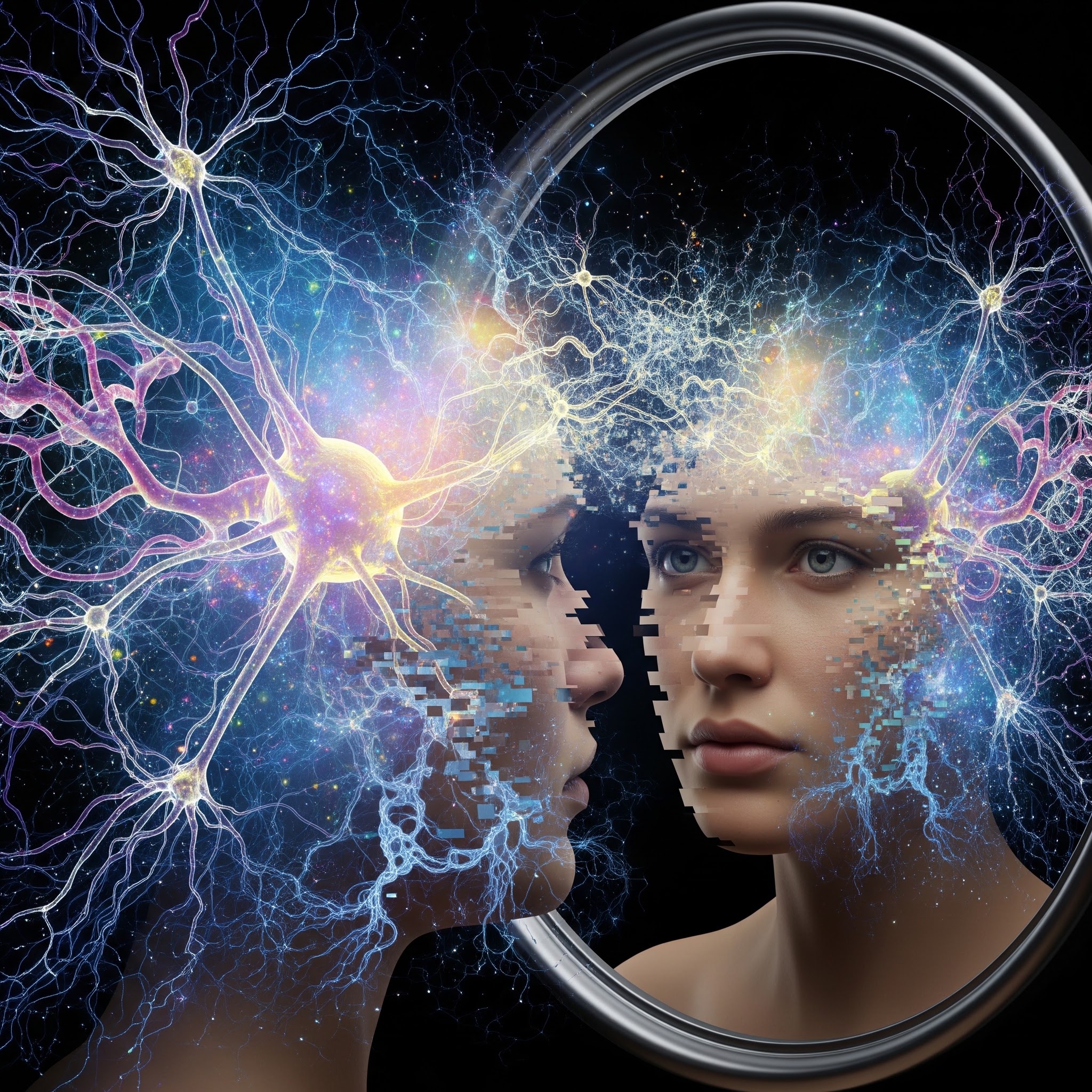
The Biological Glitch: When Your Brain Decides to Erase You
We like to think of our eyes as high-definition video cameras, faithfully recording every pixel of reality and streaming an objective truth directly to our consciousness. But neuroscience tells a far more insulting story.
Your eyes are not cameras. They are highly judgmental bouncers at the exclusive nightclub of your brain, and they only let in the interesting stuff.
To understand why the face in the mirror melts when you stare at it too long, we have to look past the mystical and dive into the magnificent, lazy machinery of the human body. We need to talk about the Troxler Effect.
The Bored Neurons
Human beings are not designed to see the world perfectly; we are designed to survive it.
Imagine our ancient ancestors foraging on the savanna. To stay alive, they didn't need to deeply analyze the unchanging texture of the dirt or the static bark of a tree. They needed to spot the subtle, terrifying rustle of a predator in the tall grass. Evolution hardwired our brains to be obsessed with change. We are, fundamentally, motion detectors.
Because the brain is an incredibly efficient machine that consumes a massive amount of energy, it aggressively cuts corners. When a visual stimulus remains perfectly still and unchanging in your peripheral vision, the neurons in your eyes literally get bored. They assess the static image, determine it is neither a threat nor a snack, and in a ruthless act of biological conservation, they simply stop transmitting that information to the brain.
When you stare relentlessly into your own eyes in a dim mirror, you are forcing your visual field to remain perfectly static. You are weaponizing your brain's efficiency against itself.
Semantic Satiation for the Face
If this sounds hard to believe, consider how we process language.
Have you ever taken a perfectly normal word—like "spoon" or "basket"—and repeated it out loud fifty times? Try it. By the thirtieth "spoon," the word completely dissolves. The syllables detach from the object they represent. It loses all meaning and becomes a sequence of absurd, alien noises.
In linguistics, this is called semantic satiation. When you over-stimulate the neural pathways responsible for a specific word, the neurons get fatigued and stop firing the "meaning" of the word.
The Troxler Effect is exactly this, but for your visual reality. It is semantic satiation for the face. By staring too long and too hard, the physical structure of your identity loses its meaning. The visual data simply stops flowing.
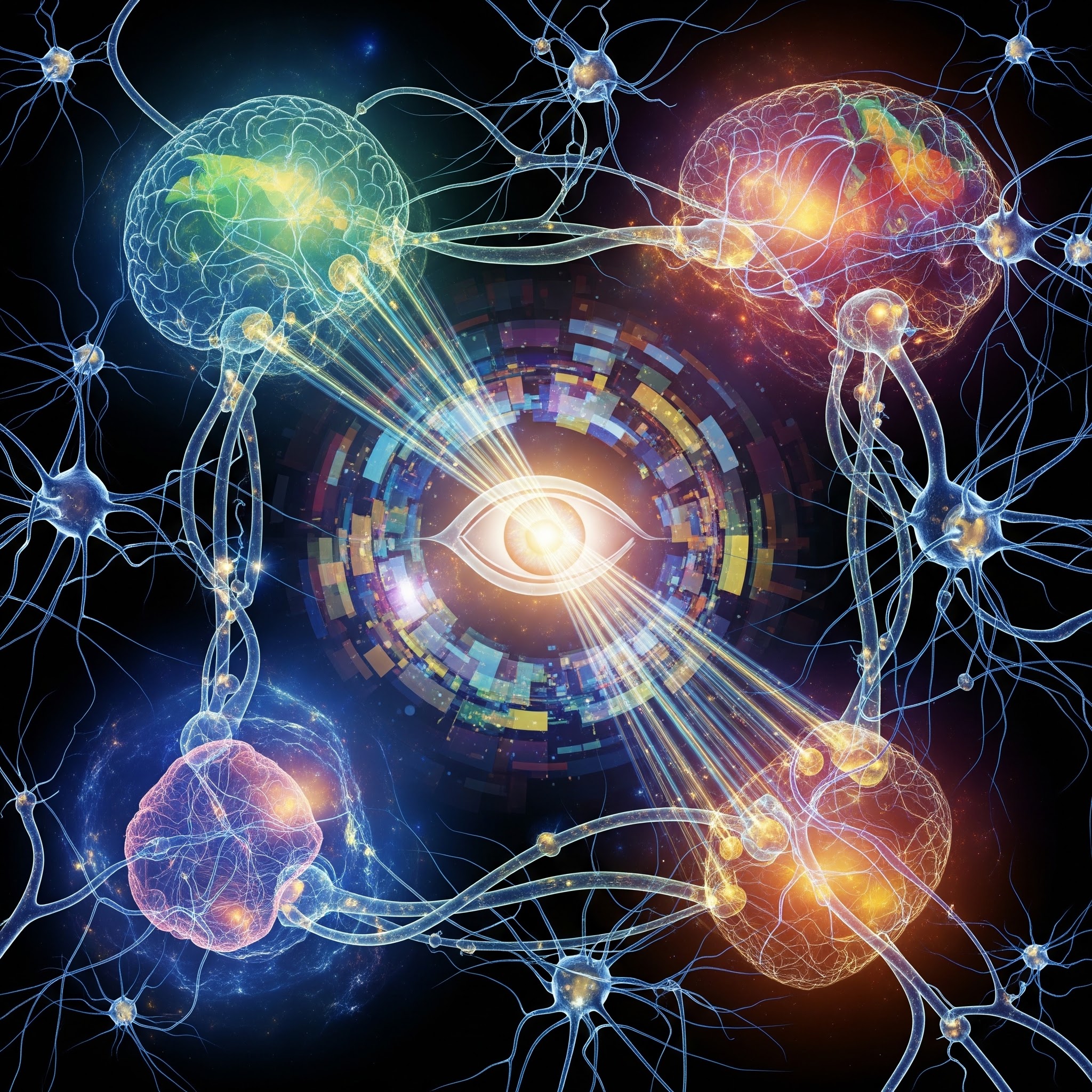
Error 404: Face Not Found
But here is where the glitch turns into a psychological thriller. The brain absolutely hates a vacuum.
When the optic nerve stops sending the data of your nose, your cheeks, and your jawline, the visual cortex in the back of your head begins to panic. Error: Input missing. In the absence of real-world data, the brain starts desperately trying to "fill in the blanks."
It fires up its own internal projector. It raids your subconscious memory banks and starts pasting predictive imagery over the blank spots in your vision. This is why your face distorts. It shifts into an old man, a strange animal, or a terrifying, shadowy caricature. You aren't summoning demons from the astral plane; you are just watching your own brain furiously guess at what is supposed to be there, hallucinating in real-time to cover up the blind spots.
The Stranger in the Dark
It is a fascinating biological glitch, but it carries a heavy philosophical payload. And it leaves us standing on the edge of a very uncomfortable abyss.
When the face dissolves in that dim room, a visceral fear almost always creeps in. Why does it feel so profoundly lonely, so uniquely scary, to look too deep into your own eyes for long enough?
If the face in the glass is just a biological mask—a temporary avatar rendered by lazy neurons that can be erased in mere minutes—then what exactly is that glitch pointing to? When the visual data stops and the reflection disappears, what is that silent presence left behind in the dark?
What is observing me, if I am no longer observing myself?
If the meat-suit staring back at you is so easily dissolved by a bored optic nerve, how could you have ever called it 'self'?
The next time you stand before the mirror, hold the gaze just a little longer. Let the glitch happen. Let the interface drop. And ask yourself: when the biological software stops running the simulation of you, who is the stranger left waiting in the silence?
 Dr. Torque
Comments (0)