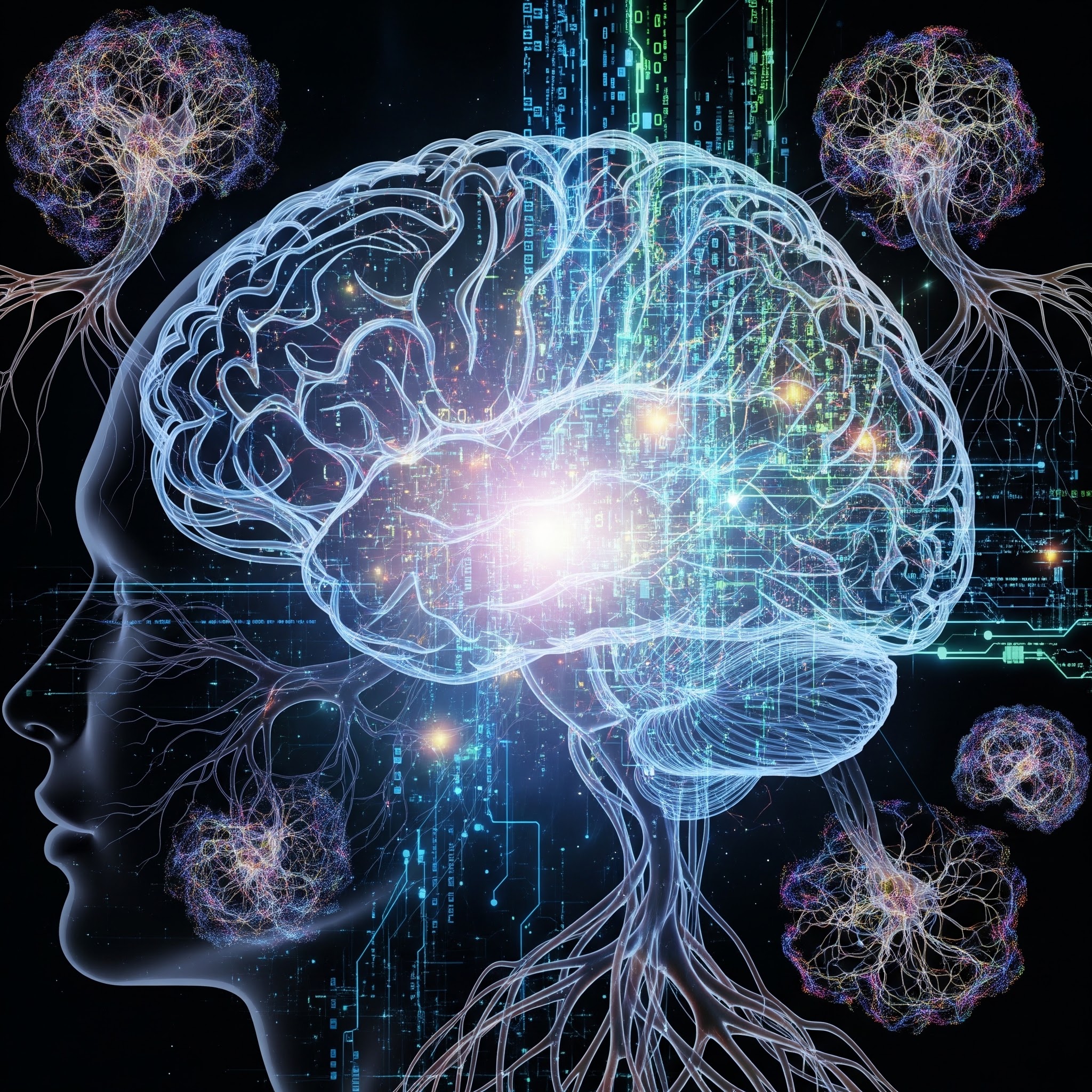
The Placebo Protocol: Hacking the Reality Engine
The Greatest Blind Spot in Science
Every year, billions of dollars are spent on clinical drug trials. Thousands of researchers, in thousands of labs, around the world, run rigorously controlled experiments to prove that their new compound does what they claim it does. And somewhere buried in the fine print of almost every single one of those trials is a number that nobody seems to want to talk about too loudly.
The placebo response rate.
Depending on the condition being studied, somewhere between 20% and 40% of patients given a sugar pill — a capsule containing absolutely no active medicine, not a single molecule of anything pharmacologically relevant — get better. Not a little better. Meaningfully, measurably, clinically better. Chronic pain reduces. Depression lifts. Irritable bowel syndrome calms. Parkinson's tremors slow. All from swallowing compressed chalk and water.
Modern medicine's response to this fact is, to put it politely, bizarre. The placebo effect is treated as a nuisance — a statistical noise floor that a real drug must rise above to be considered legitimate. Researchers spend enormous effort trying to control for it, minimize it, and explain it away. The placebo is the thing you subtract from your results to find the real results.
But pause here for a moment. If 35% of patients in a pain trial cure themselves with a fake pill, that is not a margin of error. That is the most extraordinary finding in the history of medicine. That is proof — clean, double-blind, peer-reviewed proof — that the human mind can synthesize its own pain relief, rebuild its own neurochemistry, and in some documented cases, dissolve its own tumors, based on nothing more than a convinced expectation of getting well.
Science has been staring directly at the most powerful healing mechanism ever observed, and calling it a confounding variable.
The anomaly is not the glitch. The anomaly is the main feature. We simply haven't been brave enough to say so.
The Pharmacy No One Told You About
Let us be precise here, because this is not mysticism and it is not wishful thinking. What happens inside the body during a placebo response is as physical, as measurable, and as chemically real as anything a pharmaceutical company has ever manufactured. The difference is that the laboratory is your own nervous system, and it has been operational since long before anyone wore a white coat.
Here is the sequence of events. A patient walks into a doctor's office. They are in pain, or distress, or both. The doctor — an authority figure, credentialed and trusted — examines them carefully, listens attentively, and then hands them a pill with quiet confidence, explaining that this compound has helped many people with their condition. The patient leaves with the pill, takes it as directed, and within days begins to feel genuine relief.
The pill was sugar.
What actually happened was this: the moment the patient's subconscious mind accepted the expectation of healing as credible — and it did accept it, because the entire context of the encounter was designed, consciously or not, to make it credible — a cascade of biological events was set in motion. If the patient expected pain relief, the brain issued a direct chemical instruction to the body's endogenous opioid system. The body then synthesized and released its own natural painkillers. Not metaphorically. Not psychologically. Literally — measurable in the bloodstream, blockable with opioid-receptor antagonists, as real as morphine.
If the patient expected relief from the rigid tremors of Parkinson's disease, the expectation alone triggered the brain to release dopamine — the very neurotransmitter that Parkinson's erodes. The brain, handed a permission slip in the form of a convincing ritual, unlocked a door it had been keeping shut.
This is the inner pharmacy. Every human being is walking around with it fully stocked, all the time. The placebo effect does not create healing mechanisms that don't otherwise exist. It activates mechanisms that are always there, waiting for the right signal to engage. The sugar pill did not heal anyone. It was simply the psychological key that the subconscious required to do what it was already capable of doing.
The question that should follow this immediately is an uncomfortable one: if the body can do this on command, why doesn't it do it all the time? Why are we sick at all?
The answer to that question is what makes this entire subject so much larger than medicine.
The Dark Twin, and the Ruthlessness of Code
Before we go deeper, we have to look at the shadow side of this mechanism. Because the same system that can cure you is equally capable of doing the opposite — and it does so with no ethical hesitation whatsoever.
Meet the nocebo effect.
The nocebo effect is the placebo's dark twin. If the placebo is the mind's capacity to heal through positive expectation, the nocebo is its capacity to harm through negative expectation. And the evidence for it is, frankly, unsettling.
In controlled studies, patients given a sugar pill and told that it will cause nausea frequently develop nausea. Patients told it will cause fatigue become fatigued. In one particularly sobering case, a patient diagnosed — incorrectly, as it turned out — with terminal liver cancer was told he had months to live. He deteriorated precisely on the predicted schedule and died within the projected timeframe. The autopsy revealed that his tumors had not, in fact, been large enough to have caused his death. He died on schedule, of an expectation.
To understand why this happens, it helps to shift the metaphor away from biology and into something that the analytically-minded reader might find even more clarifying: computer science.
The subconscious mind functions like an operating system. It does not have opinions. It does not have a survival agenda of its own in the moral sense. It is not trying to help you or harm you. It is simply executing code. And the code it executes is whatever the conscious mind — through sustained, emotionally charged, deeply held belief — successfully writes into it.
When a belief is accepted at the subconscious level, it does not remain an abstract thought. It is compiled into the biological machine language of the body: neuropeptides, hormones, immune signals, cellular instructions. The operating system runs it. Faithfully. Without judgment. Whether the program is called "I am healing" or "I am dying", the response is the same — execution.
This is not a metaphor designed to sound clever. The mechanism is literal. The subconscious does not distinguish between a threat that is real and a threat that is vividly, repeatedly imagined. It responds to both with identical biochemical seriousness. A person who lies awake at night catastrophizing about their health, running the same fearful narrative on a loop, is — in the most technical sense — writing nocebo code into their own operating system. And the operating system, being the diligent, amoral executor it is, runs the program.
This is also why the patterns explored in deep psychological work — the recurring self-sabotage, the programs that activate precisely at the threshold of success, the internal voice that says "I am not ready" or "I do not deserve this" — are not merely emotional experiences. They are instructions. They have a biology. And until the code is rewritten, the system will keep executing it.
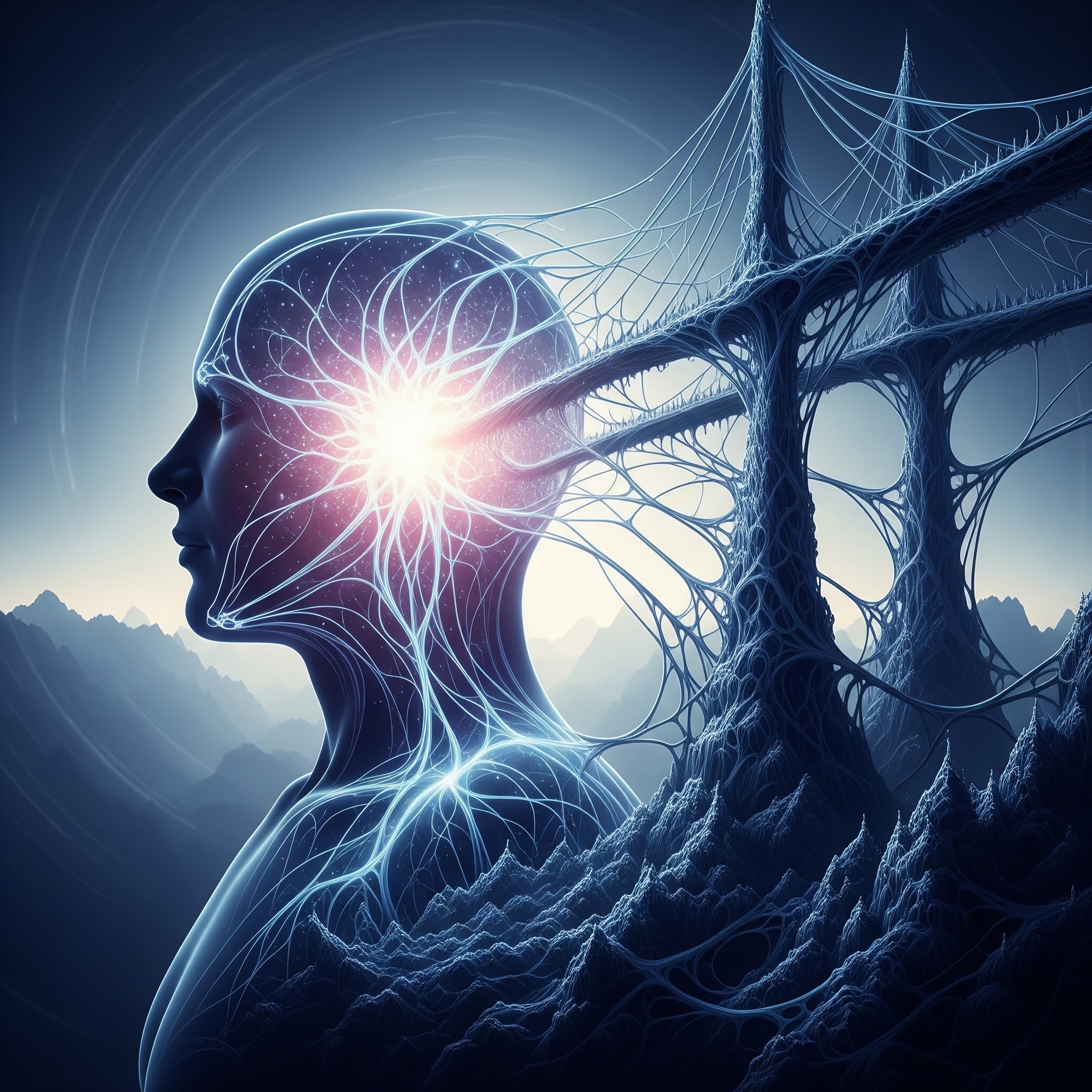
The Reality Engine
Now we push past the body.
If the subconscious mind can restructure neurochemistry, modulate immune function, and alter the physical architecture of the nervous system based purely on a deeply held expectation — then what, exactly, is the ceiling of this mechanism?
The physical body is the most local, most immediately accessible layer of what we experience as reality. It is the thing we can most easily measure, scan, and run trials on. But there is a line of inquiry here that mainstream science approaches very carefully, if it approaches it at all: if the inner world shapes the biology of the body this precisely, does it also shape the physics of what we encounter outside it?
Is a sustained pattern of expecting failure — a kind of systemic, chronic nocebo effect applied not to the body but to one's circumstances — behind what people call a streak of bad luck? Is the uncanny serendipity experienced by people who enter a period of deep conviction and inner clarity a placebo effect applied to probability rather than pain?
These questions sit at the edge of what hard science is currently equipped to answer. Quantum mechanics has opened the door to the idea that the observer is not passive — that at the subatomic level, the act of measurement participates in the outcome being measured. What that means at the scale of human experience and intention remains genuinely and productively controversial.
But the direction of the evidence is not incoherent. The human nervous system evolved in a dynamic, interactive universe. The instinct that first sharpened in the oceans, the intuition that grew from millions of years of reading environmental signals before the conscious mind could articulate them, the intelligence that built civilizations — all of it was built in relationship with the world, not in isolation from it. The mind did not evolve as a passive receiver of a fixed external reality. It evolved as an active participant in a negotiated one.
The placebo effect may simply be the most controlled, measurable, and therefore most credible version of something that operates on a much wider scale than a clinical trial can contain.
We are not passive observers of our lives. We are, for better and worse, their architects.
Bypassing the Firewall
Here is the problem. And it is a real one.
You cannot consciously fake your way to a placebo response. That is not how the system works. If you know it is a sugar pill and you take it while maintaining a full, rational awareness that it contains no medicine, the code does not execute. The healing does not happen. The knowing gets in the way.
This is because the conscious, analytical mind functions as a firewall. It is the skeptic at the door, and its job is to evaluate incoming information and reject what it determines to be false. This is an extraordinarily useful function — it is, in fact, the same logical faculty that evolved alongside intuition to form the full architecture of human intelligence. But in this particular context, it is also the obstacle.
To write new code into the subconscious operating system, you have to get past the firewall. You have to find a way to deliver the instruction not to the analytical gatekeeper, but directly to the executing system beneath it.
This, when you look at it clearly, is the actual purpose of every serious contemplative and meditative tradition that has ever existed.
Deep meditation is not relaxation, though it may feel like it. It is a technology for quieting the analytical mind — the DMN, the inner skeptic — long enough to make the subconscious accessible. The elaborate rituals of ancient healing traditions, the repetitive chanting, the breath-work, the fasting, the sleep deprivation used in vision ceremonies — these are not primitive superstitions. They are, each in their own way, systematic methods for suspending the firewall, however briefly, to allow new instructions to pass through.
Visualization, practiced with enough emotional vividness and physical specificity, does not feel to the subconscious like imagining. It feels, at the neurochemical level, like experiencing.
The body responds to a deeply felt visualization of health with the same biochemical activity as it responds to actual health. The operating system does not distinguish between a vividly rendered internal experience and an external one. Both are just input.
The practical implication of all of this is not small. It means that the most important variable in whether you heal, succeed, recover, or thrive is not primarily the pill, the plan, or the external circumstance. It is the state of the system running beneath everything else — the deep, unexamined, emotionally encoded expectations that you have been accumulating and running since long before you were capable of questioning them.
Rewriting that code is the real work. And it is harder than taking a pill.
But here is what makes it worth pursuing: once you learn — through whatever practice or method allows you to reach that place of genuine subconscious access — you do not need the sugar pill anymore. You do not need the ritual, the ceremony, or even, ultimately, the therapist. You become the alchemist working directly on the substance of your own reality.
You become the architect.
The Hypochondriac's Superpower
Before we close, there is one more reframe worth making — and it is aimed directly at a group of people who are, often unknowingly, the most powerful demonstrators of everything this article has argued.
We need to talk about the hypochondriac.
Traditionally, hypochondria is treated as a flaw — a mental health liability, a weakness of imagination, something to be managed and suppressed. The hypochondriac reads about a rare tropical disease at 11pm and wakes up at 3am genuinely convinced they have contracted it. They google a mild headache and arrive at a brain tumour. They are dismissed by doctors, exhausted by their own minds, and frequently left feeling ashamed of a tendency they cannot seem to switch off.
But look at what they are actually doing through the lens of the Placebo Protocol.
A hypochondriac is a person who has accidentally, and with remarkable proficiency, mastered the nocebo effect. They can read a single paragraph describing a set of symptoms and, through the sheer concentrated force of vivid, emotionally charged expectation, begin manifesting those physical symptoms in their own body — sometimes within hours. No sugar pill required. No authority figure in a white coat required. Their imagination alone is sufficient to bypass the firewall and write biological code directly into the operating system.
That is not a weakness. That is an extraordinarily powerful and rare neurological ability.
The hardware for subconscious reprogramming — which most people spend years in meditation retreats and therapy offices trying to develop — is already fully installed and running in the hypochondriac at high capacity. The only problem is that the polarity is set to negative. The system is pointed in the wrong direction. Instead of running the program "I am healing, I am strong, this body is capable," it is running "I am fragile, something is wrong, danger is imminent."
But the machinery behind both programs is identical. The engine is the same. Only the destination differs.
This matters practically, not just philosophically. If you recognize yourself in any part of that description — the catastrophic imagination, the body that seems disturbingly responsive to whatever you fear most — then you are not broken. You are not weaker than others. You are, in a very specific and technical sense, more neurologically sensitive than most, with a more direct and open channel between conscious thought and subconscious biological response.
The invitation is simply this: what would happen if you began pointing that same focused, emotionally vivid intensity toward something you want rather than something you fear? What would happen if the detailed, high-definition inner cinema your mind already runs on autopilot were redirected — not suppressed, not medicated into silence, but genuinely redirected — toward an expectation of vitality, resilience, and possibility?
The nocebo runs so powerfully in anxious minds precisely because the expectation of harm is felt, not just thought. It is visceral. It is believed at the body level, not just the intellectual level. That is exactly what makes it so effective at writing code into the operating system.
The placebo works by exactly the same mechanism. The only difference is in what you are instructing the system to do.
Reframe the sensitivity. Redirect the engine. The hypochondriac who learns to invert their own polarity does not become an average person with average access to their subconscious. They become something considerably more interesting than that.
The placebo effect is not a curiosity. It is a window — cracked open in the wall between mind and matter — through which something extraordinary keeps insisting on being seen. The only question is whether we are finally ready to look — and brave enough to point that gaze inward, with intention, rather than fear.
 Dr. Torque
Comments (0)